See it work / Legal and compliance
Compliance filings compared side by side
One step pulls the same fields from every filing into a single table. Each row links back to its source.
The problem
Why this work is slow today.
A compliance review reads the same sections in many filings. The reviewer copies each statement into a spreadsheet to compare them. The work is careful, slow, and hard to check.
In the demo
What you see, step by step.
One step does the work
The whole workflow runs on a data extractor that returns exactly the fields you define.
Attach the filings
Company filings are attached as sources. More can be added at any time.
Define the columns
Company name, statement of compliance, and auditor's report. Rules can require a value or enforce a pattern.
Compare and verify
Every filing follows the same structure, and each row links back to its source file.
The result
What changes for your team.
Five filings become one structured table with none skipped. The reviewer compares conclusions directly and can check any value against the original document in one click.
Who it fits
Compliance teams
Reviewers who compare disclosures across entities.
Audit and assurance
Firms that read the same sections in many reports.
Investor and credit analysts
Teams that screen filings at volume.
Transcript
The narration, in full.
This is Workflow AI, where FinBlade AI turns repeatable business processes into automated workflows that run on demand or on a schedule. Our first use case is compliance review. Listed companies publish a statement of compliance with corporate governance regulations, along with their auditor's review of it. This entire workflow runs on a single node, the Data Extractor.
It reads each document and returns exactly the fields you define. Inside the node, the company filings are attached as sources, and more can be added at any time. The results are collected in one structured table. The table stays live, and new columns can be added whenever the review needs more detail. The columns define what to extract: the company name, the statement of compliance, and the auditor's report.
Each column is set up in plain language. Rules can require a value, keep it unique, or enforce a set pattern, and any edit that breaks a rule is refused. For the statement of compliance, one instruction tells the extractor exactly what to locate in each filing. Here, the instruction points it to the statement issued under the 2019 Corporate Governance Regulations.
Every filing now follows the same structure: the company, its statement of compliance, and its auditor's conclusion, side by side and easy to compare. Each row links back to its source file, so any value can be checked against the original filing. The output brings it all together: 5 filings processed, none skipped, and compiled into a single structured table.
The finished table can be copied in one click, ready for the review team. Compliance review automated in one workflow. FinBlade AI, where enterprise meets intelligence.
This demo is produced by ICS Nett and shows FinBlade AI running on sample data. Company names, people, and figures are illustrative. Your deployment runs on your own data, inside your own boundary.
Keep watching
Related demos.
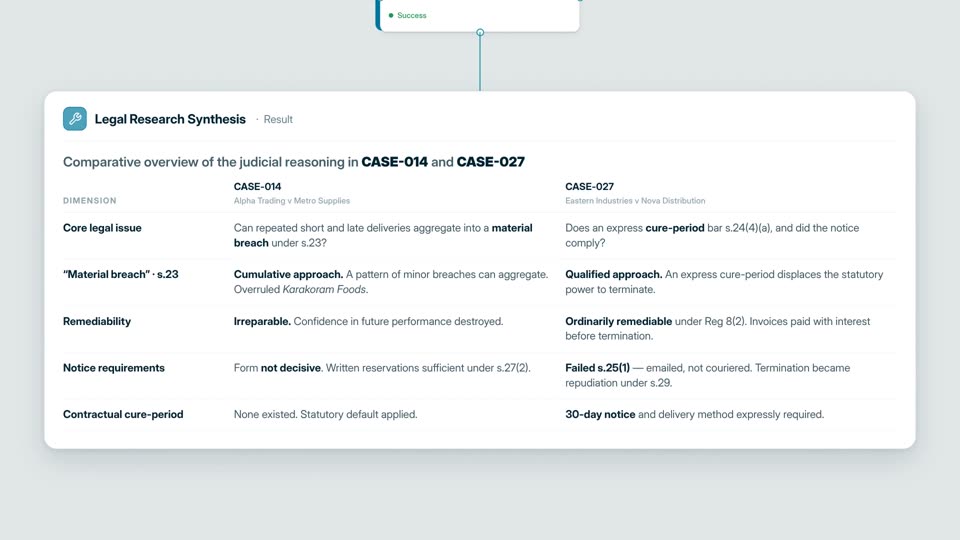 1:32
Legal researchTwo judgments, one statute, a side by side answerThe assistant reads the act, the regulations, and both judgments, then compares the reasoning with section numbers.
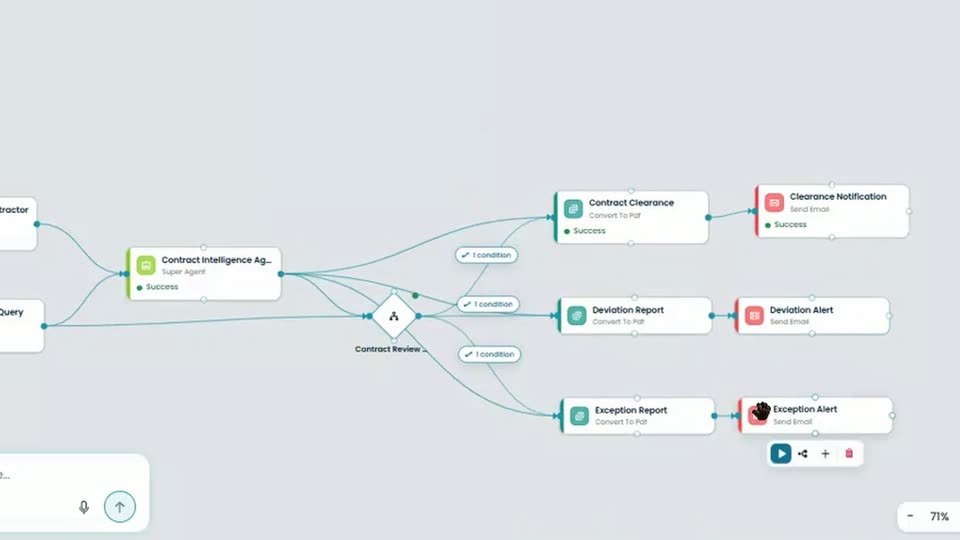 2:02
ContractsContracts reviewed clause by clauseKey terms are extracted into a table, checked against your clause rules, and routed as clear, deviation, or exception.
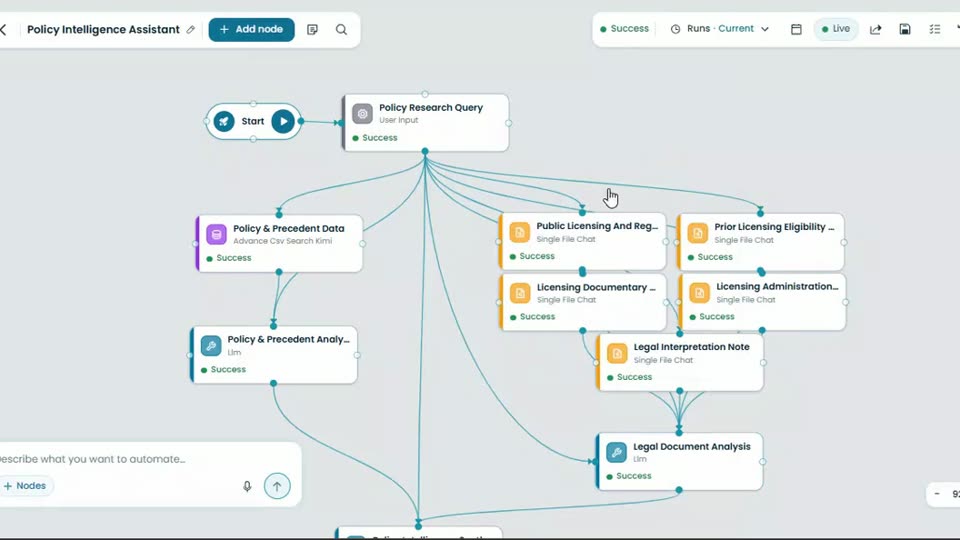 1:55
Public sectorA whole policy library, one question awayAsk which positions rely on rules no longer in force. Every claim is cited back to its page.
Your AI. Your data. Your control.
Want this on your own data?
Start with a free call with Thomas. We map the work, the data rules, and the right deployment path.
Free. Direct. No pitch deck. Rooted in Middle Tennessee, serving organizations nationwide.