See it work / Legal and compliance
Two judgments, one statute, a side by side answer
The assistant reads the act, the regulations, and both judgments, then compares the reasoning with section numbers.
The problem
Why this work is slow today.
Two judgments apply the same statute and reach opposite outcomes. Working out why means reading the act, the regulations, the practice note, and both judgments side by side. That is hours of careful reading before any analysis starts.
In the demo
What you see, step by step.
One question goes in
Compare the reasoning in two named cases.
Readers take it to the documents
Five readers take the question to five documents. Each answers from its own file. A sixth searches the registers of case law, instruments, and precedent.
Two streams, then a synthesis
The registers feed one model and the readings feed another. Both meet in a synthesis step with the question still attached.
A comparison, not a summary
The answer sets out the issues side by side: material breach, remediability, notice, and the cure period, each with its section number.
The result
What changes for your team.
The lawyer receives a structured comparison that points to the sources. The reading is done, and the judgment about what it means stays with the lawyer. By default, the matter files stay inside the firm's boundary.
Who it fits
Litigation teams
Lawyers who compare authorities under time pressure.
In-house counsel
Teams that need a fast, sourced view before they instruct outside counsel.
Knowledge lawyers
People who maintain precedent and practice notes.
Transcript
The narration, in full.
2 judgments, the same statute, opposite outcomes. Working out why means reading the Act, the regulations, the Practice Note, and both judgments side by side. This is the Legal Research and Case Intelligence Assistant. One question goes in at the top. 11 nodes pick it up at once. Compare the reasoning in case-014 and case-027. 5 readers take it to 5 documents.
Each answers from its own file. A 6th searches the registers, case law, instruments, precedent. The registers feed one model. The readings feed another. Both streams meet in the synthesis node, with the questions still attached. What comes back is not a summary; it is a comparison. Material breach, remediability, notice, the cure period, with the section numbers.
Case-014 took the cumulative approach. Case-027 held an express cure period displaces it. The notice failed Section 25. Termination became repudiation. 8 sources. 3 analysis stages, 1 researched answer.
This demo is produced by ICS Nett and shows FinBlade AI running on sample data. Company names, people, and figures are illustrative. Your deployment runs on your own data, inside your own boundary.
Keep watching
Related demos.
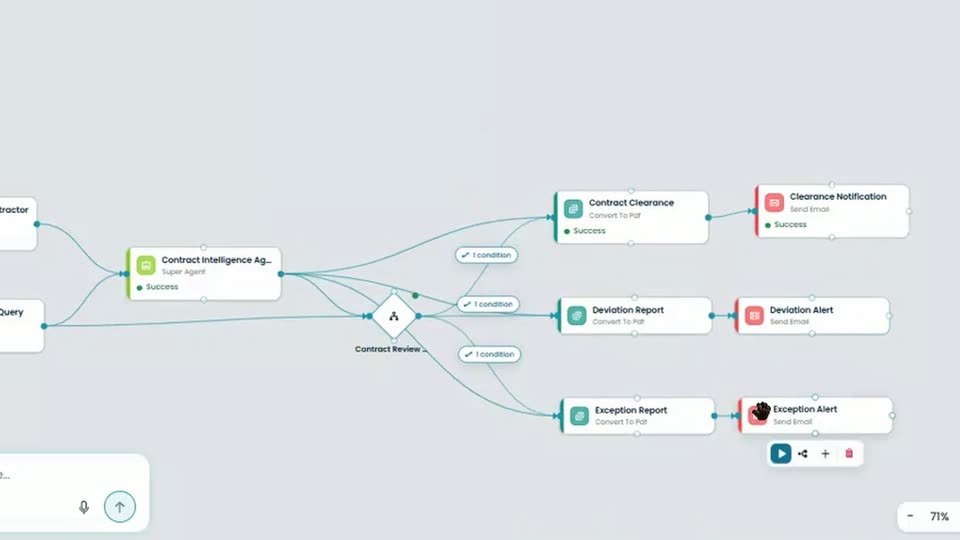 2:02
ContractsContracts reviewed clause by clauseKey terms are extracted into a table, checked against your clause rules, and routed as clear, deviation, or exception.
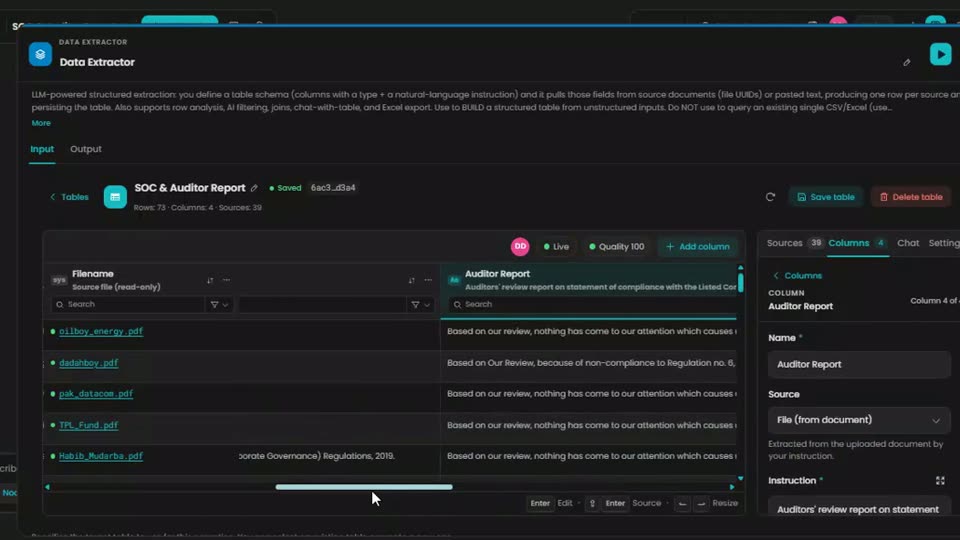 2:22
ComplianceCompliance filings compared side by sideOne step pulls the same fields from every filing into a single table. Each row links back to its source.
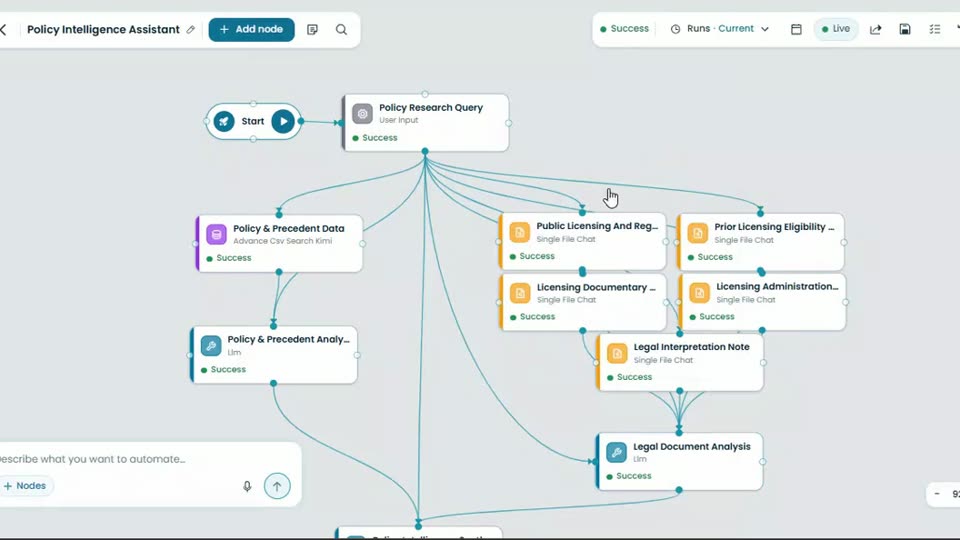 1:55
Public sectorA whole policy library, one question awayAsk which positions rely on rules no longer in force. Every claim is cited back to its page.
Your AI. Your data. Your control.
Want this on your own data?
Start with a free call with Thomas. We map the work, the data rules, and the right deployment path.
Free. Direct. No pitch deck. Rooted in Middle Tennessee, serving organizations nationwide.