See it work / Legal and compliance
Contracts reviewed clause by clause
Key terms are extracted into a table, checked against your clause rules, and routed as clear, deviation, or exception.
The problem
Why this work is slow today.
First-pass contract review is slow and repetitive. A reviewer reads for the same dozen provisions every time. Standard contracts take as long as unusual ones, and the unusual ones are where the risk sits.
In the demo
What you see, step by step.
Turn the contract library into a table
A data extractor reads ten contracts into twelve columns: counterparty, payment terms, governing law, liability cap, and more. Each column is defined in plain language.
Ask a review question
A super agent checks one contract against the rules for its agreement type and reads all thirteen extracted provisions in one pass.
Route the result
A decision step picks one of three paths: acceptable standard, a deviation to report, or a material exception.
Send the right document
Each path builds its own report and emails the reviewer who needs it.
The result
What changes for your team.
Standard contracts clear quickly with a record of every provision and the position taken on it. Reviewers spend their time on the deviations and exceptions. The clause rules are yours, written in plain language.
Who it fits
Legal departments
Teams that review supplier and customer paper at volume.
Procurement
Buyers who need a fast first pass before legal review.
Law firms
Practices that run due diligence and contract audits.
Transcript
The narration, in full.
This Workflow AI use case reviews contracts clause by clause, from the signed agreement to the alert in the reviewer's inbox. It starts with the data extractor reading the contract library as a structured table. 10 sources become 12 columns: the counterparty, the payment terms, the governing law, the liability cap, and the rest. Each column is defined in plain language, like, populate this column with the counterparty.
That finished table is what the rest of the review reads from. A contract review query carries the reviewer's question in from the front end. A super agent takes it from there, working from the extracted clauses and the clause library attached to it. Here, it checks contract CLN-1049 against the rules for equipment supply agreements and reads all 13 extracted provisions in one pass.
Nothing triggers escalation. Net 30-day payment, 60-day termination, a mutual liability cap, 5-year confidentiality, and price rises capped at 5% a year. The decision node then routes the review down one of 3 paths: an acceptable standard, a deviation to report, or a material exception. Each path builds its own document, converted straight to PDF with the filename, the type, and the margins set on the node.
3 documents: a clearance report, a deviation report, and an exception report, each with its own filename and layout. And each one goes out by email, with the subject, the recipient, and the report attached. And 3 notifications to match, each addressed to the reviewer who needs it. The clearance report comes out as a working document, every provision listed with the position taken on it.
One contract in, and the right review, the right record, and the right notification out.
This demo is produced by ICS Nett and shows FinBlade AI running on sample data. Company names, people, and figures are illustrative. Your deployment runs on your own data, inside your own boundary.
Keep watching
Related demos.
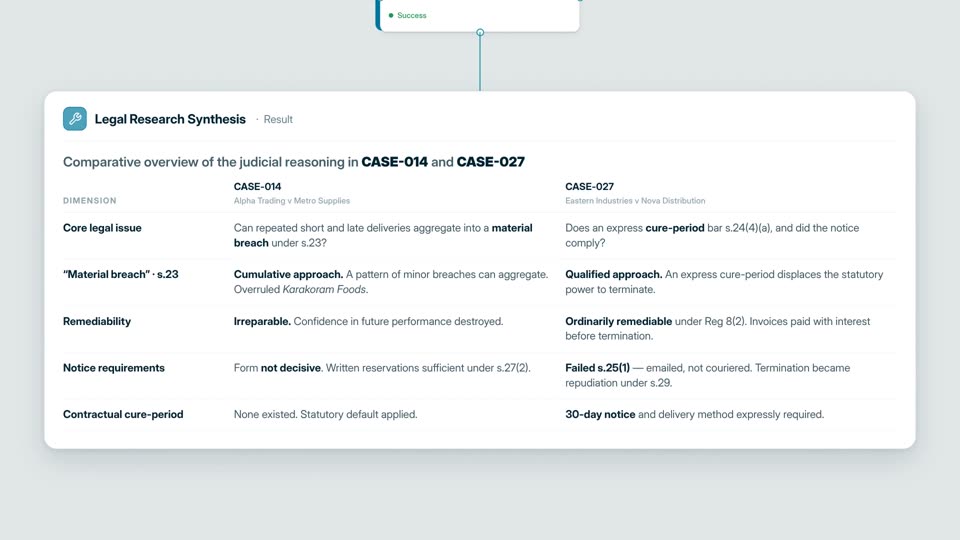 1:32
Legal researchTwo judgments, one statute, a side by side answerThe assistant reads the act, the regulations, and both judgments, then compares the reasoning with section numbers.
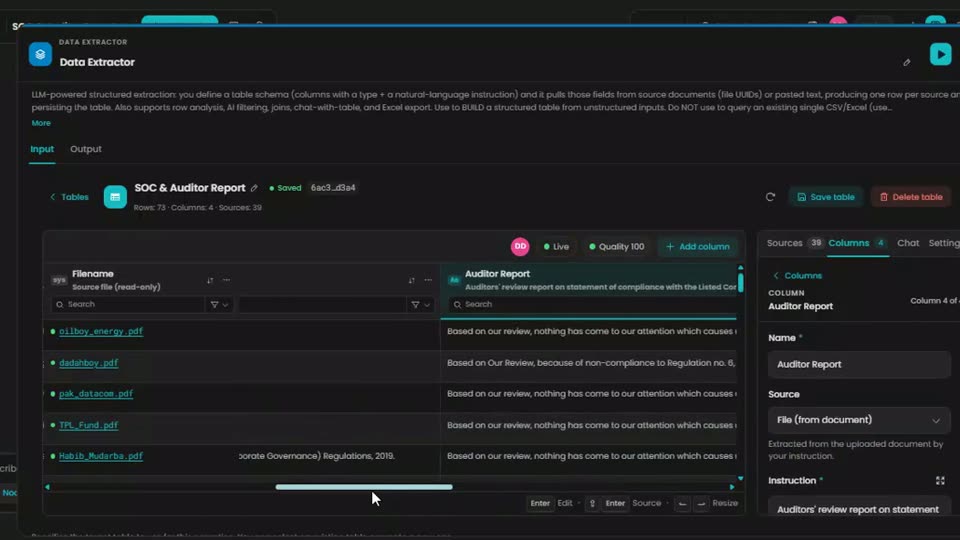 2:22
ComplianceCompliance filings compared side by sideOne step pulls the same fields from every filing into a single table. Each row links back to its source.
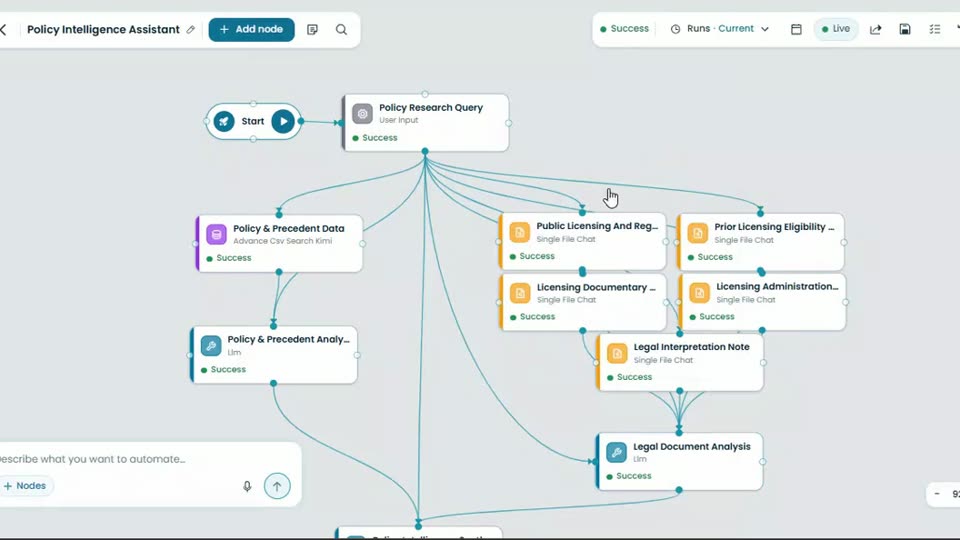 1:55
Public sectorA whole policy library, one question awayAsk which positions rely on rules no longer in force. Every claim is cited back to its page.
Your AI. Your data. Your control.
Want this on your own data?
Start with a free call with Thomas. We map the work, the data rules, and the right deployment path.
Free. Direct. No pitch deck. Rooted in Middle Tennessee, serving organizations nationwide.