See it work / Energy and utilities
Who is cleared to work, with the evidence
Training, permits, and medical certificates are checked together. The answer is dated, and the right report goes out.
The problem
Why this work is slow today.
Nobody goes to a hazardous site without current certificates. Induction, survival training, gas awareness, and medical fitness sit in five policies and five registers. Someone checks them by hand before every deployment.
In the demo
What you see, step by step.
Ask the deployment question
Which employees are ready for offshore deployment?
Ten sources go in
Training records, permits to work, medical certificates, competency certificates, and work assignments.
The answer comes back dated
Sixteen employees are ready as of a stated date. The rest are listed as in progress or scheduled.
The workflow picks a route
Three routes exist: readiness, training gap, and safety exception. The matching report is generated and sent.
The result
What changes for your team.
Planners get a dated, sourced answer in place of a manual cross-check. Gaps and exceptions take their own route, so they reach the people who can close them.
Who it fits
Energy and offshore operators
Companies that deploy crews to controlled sites.
HSE teams
Functions that own certification and permits.
Contractor management
Teams that verify third-party workers.
Transcript
The narration, in full.
Nobody goes offshore without current certificates. Induction, sea survival, gas awareness, medical fitness. 5 policies and 5 registers, checked by hand. This workflow is the Workforce Safety and Training Assistant. Built once. After that, it runs on a question. What is the Workforce Safety and Training Assistant? Which employees are ready for offshore deployment?
10 sources go in behind it: training records, permits to work, medical certificates, competency certificates, work assignments. The answer comes back dated. As of the 1st of October, 16 employees with offshore assignments are ready for work, 11 in progress through the 4th, 5 scheduled to the 18th. Then the workflow decides what to do about it.
3 routes were defined: readiness, training gap, safety exception. All 3 are live. Only one matches. The readiness route runs. The other 2 stay closed. The report is generated as a PDF and sent with the attachment to the people who need it. One question, 10 sources, 16 cleared for work.
This demo is produced by ICS Nett and shows FinBlade AI running on sample data. Company names, people, and figures are illustrative. Your deployment runs on your own data, inside your own boundary.
Keep watching
Related demos.
 1:36
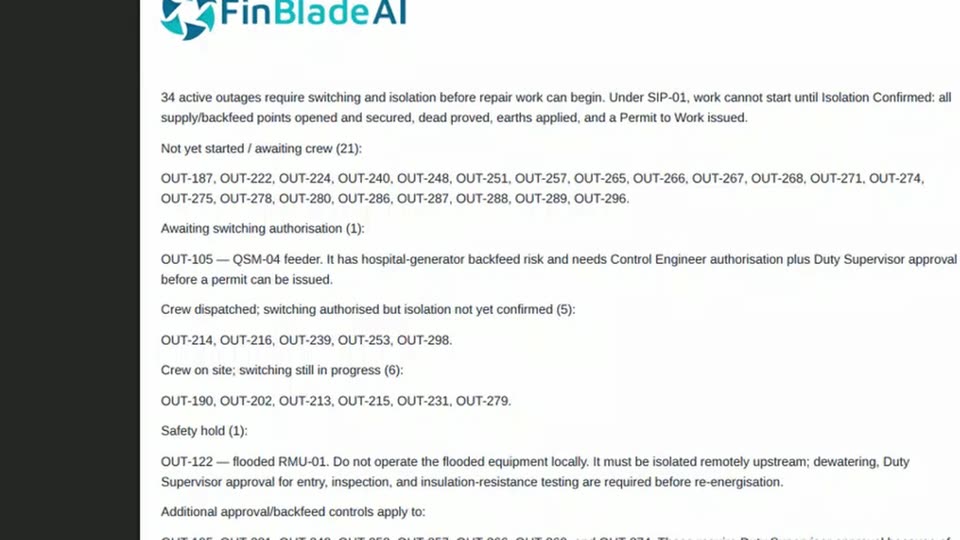
Energy and utilitiesOutage work sorted and crews briefedOne query sorts active outages by what each is waiting on, then sends the dispatch report to the right people.
 1:28
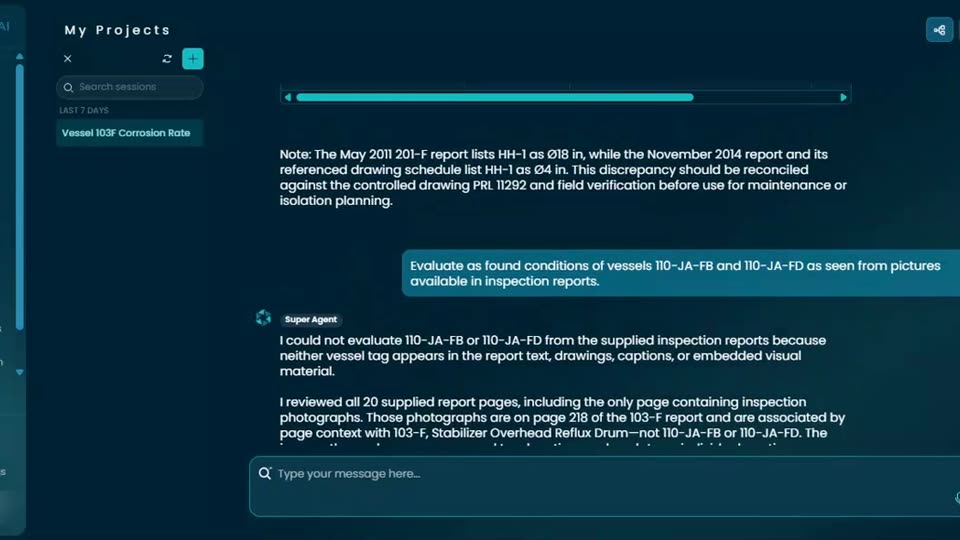
Industrial inspectionInspection reports turned into an assistantEngineers ask about corrosion and remaining life. Answers come from the report pages, and the assistant says when the data is missing.
 2:54
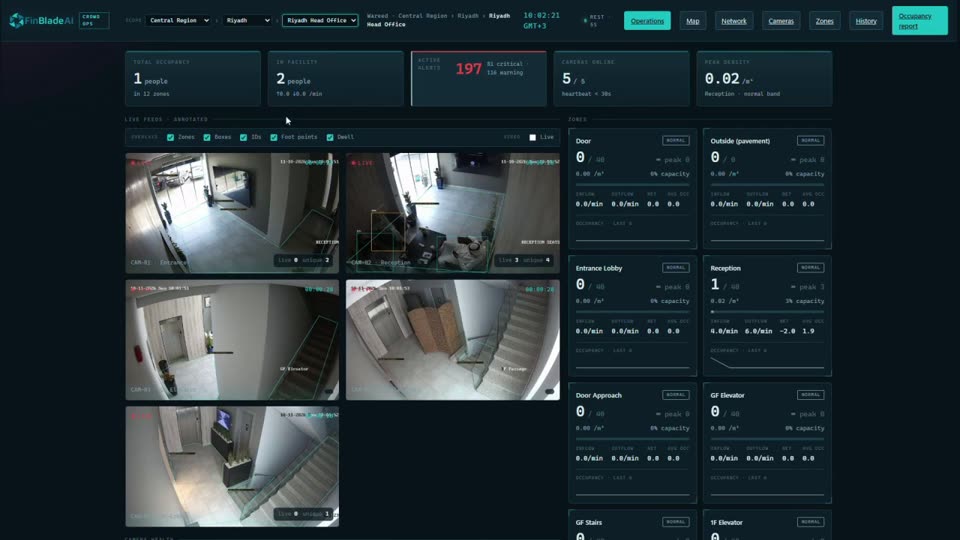
Computer visionEvery site, camera, and alert on one screenExisting security cameras become live data: occupancy, restricted zones, alerts, and vehicle locations across a whole network.
Your AI. Your data. Your control.
Want this on your own data?
Start with a free call with Thomas. We map the work, the data rules, and the right deployment path.
Free. Direct. No pitch deck. Rooted in Middle Tennessee, serving organizations nationwide.