Pharmacy stock risks, from one question
The workflow checks inventory, demand, expiry, and policy together, then sends the pharmacy team a report.
The problem
Why this work is slow today.
Stock position depends on the inventory file, the procedure schedule, expiry dates, and supplier lead times. Each lives in a different place. A shortage is usually found when a shelf is empty.
In the demo
What you see, step by step.
One question comes in
The workflow starts from an inventory question from the pharmacy.
Policy first
A step reads the pharmacy policy, so every answer is measured against the hospital's own rules.
Three data searches
Inventory, demand against the procedure schedule, and expiry with supplier data.
Report and notify
The result becomes a report that names each item and the issue behind it, then goes out by email.
The result
What changes for your team.
The report separates what is comfortable from what is critical. It also says plainly where the data stops, so nobody mistakes an estimate for a guarantee.
Who it fits
Hospital pharmacies
Teams that manage stock against scheduled procedures.
Clinic and surgery center groups
Operators with consumables across sites.
Supply chain leads
Managers who need early notice of shortfalls.
Transcript
The narration, in full.
This Workflow AI use case watches pharmacy and consumables stock, from the inventory question to the report in the pharmacist's inbox. It starts at the User Input node, the bridge between the pharmacy and the workflow, carrying each question in from the front end. A Single File Chat node reads the pharmacy policy document, so every answer is measured against the rules the hospital already works to.
3 CSV search nodes supply the numbers. Inventory data reads the master file. Healthcare demand reads consumption history against the procedure schedule. Expiry and supplier data reads the expiry tracker and the supplier list. The LLM nodes act as an analytics and management engine, bringing those strands together with the temperature kept low so the answers stay precise.
The results are converted straight to PDF with the file name, the font, and the margins set on the node. The report names each item and the issue behind it. Metronidazole 75 units below its minimum. Saline already outrunning scheduled demand. Ceftriaxone pushed near its floor by emergency use. It separates what is comfortable from what is critical and says plainly where the data stops.
Without live on-hand counts, full cover for every scheduled procedure cannot be guaranteed. Then it goes out by email, so the pharmacy team is notified without anyone chasing it. One question in, and the stock position, the risks, and the notice out.
This demo is produced by ICS Nett and shows FinBlade AI running on sample data. Company names, people, and figures are illustrative. Your deployment runs on your own data, inside your own boundary.
Keep watching
Related demos.
 2:26
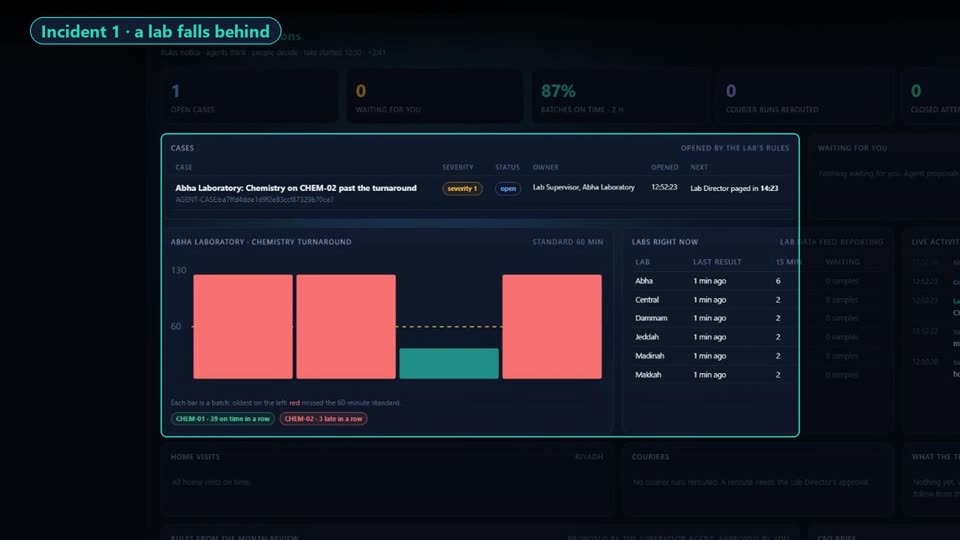
Healthcare operationsAI agents run the day. People make the calls.A lab network hits four problems in one day. AI agents spot each one, propose a fix with the evidence, and wait for a named person to approve.
 1:26
Document intakeHandwritten forms turned into a clean tableScanned forms in two languages are read, and the fields you name are pulled into one table for review.
 1:55
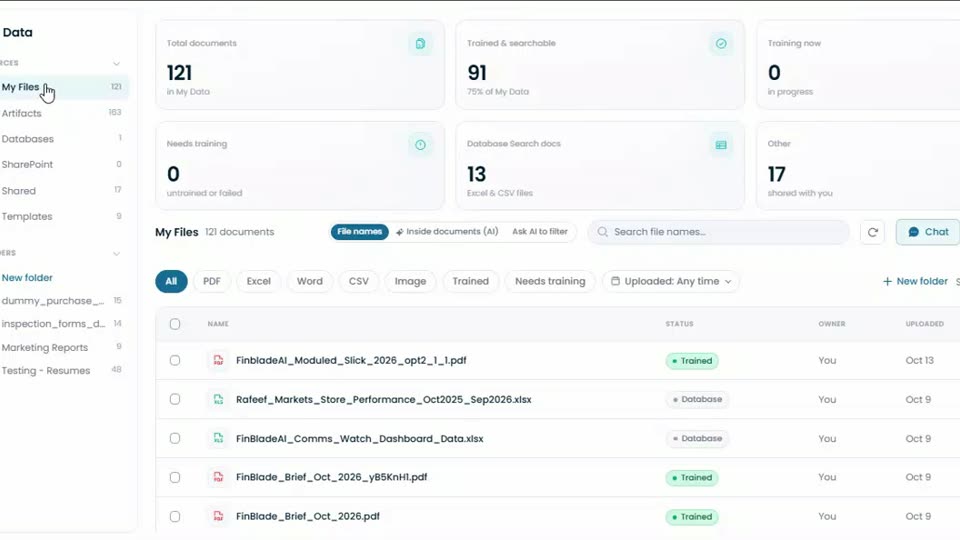
PlatformEvery file in one place, trained and searchableUpload documents, spreadsheets, and scans. Ask questions of one file or many, and get answers that cite the file they came from.
Your AI. Your data. Your control.
Want this on your own data?
Start with a free call with Thomas. We map the work, the data rules, and the right deployment path.
Free. Direct. No pitch deck. Rooted in Middle Tennessee, serving organizations nationwide.